Showing posts with label design. Show all posts

12 December, 2011

'Instant' Ramayana!

http://www.flickr.com/photos/rajkamalaich/5754206031/sizes/o/in/photostream/

This infographic is brilliant - ramayana condensed into 25852px × 533px !!

06 December, 2011

Berg Little Printer

I am definitely going to buy this someday :)

Little Printer lives in your home, bringing you news, puzzles and gossip from friends. Use your smartphone to set up subscriptions and Little Printer will gather them together to create a timely, beautiful mini-newspaper.

http://bergcloud.com/littleprinter/

Typeradio - the radio channel on type & design

http://www.typeradio.org

Typeradio is a Micro FM broadcast, a MP3 internet radio stream and a podcast station. Broadcasting questions, answers, performances, events and talks online and onstage.

02 December, 2011

Celebrity 'Speakers'

Red Dot design award winning Speakers (made in Germany)
http://www.hohrizontal-51.de/

Wireless Speakers which fit in light bulb holder (made in India)
http://violet3d.com/

27 November, 2011

Kickstarter - Funding Platform for Creative Projects

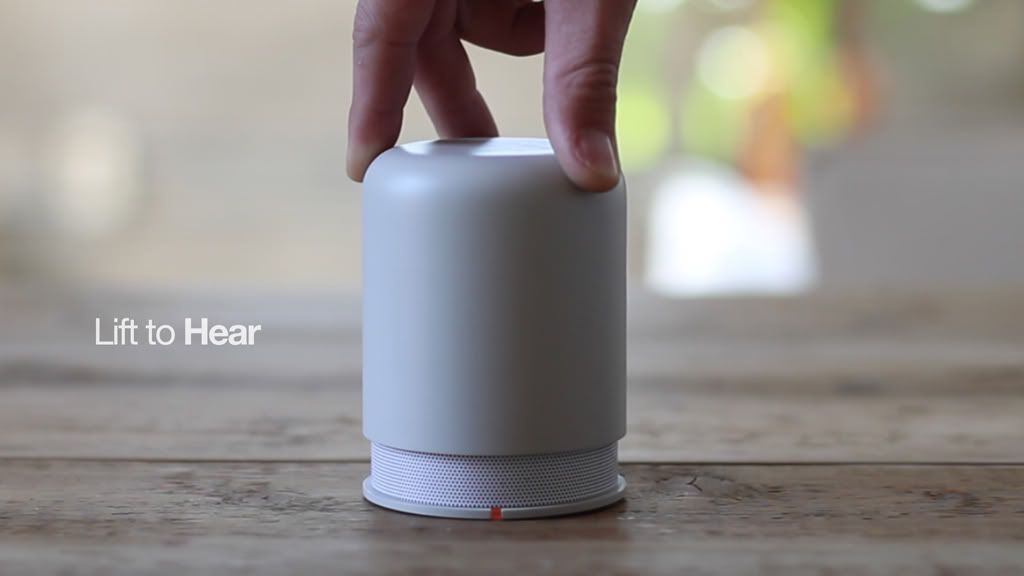
Recently came across this product -  A Hidden Radio & BlueTooth Speaker on Kickstarter. Kickstarter, a funding platform, has an interesting business model to offer. And ofcourse the Radio is awesome :) How Kickstarter basically works is the creator can put his project on this funding platform and interested people can pledge an amount. Once the amount is reached, the project starts off. (read more below)

The HiddenRadio & Bluetooth Speaker is based off minimal, timeless design and user intuition. When asleep it hides all its functions, being silent and unanimated. To turn it on you simply twist and lift the cap; the further you lift the cap the more internal volume is created and will amplify to over 80dB of crystal clear sound. This unique design connects and captivates the user through its intuitive functionality.
Kickstarter is the world's largest funding platform for creative projects. Every week, tens of thousands of amazing people pledge millions of dollars to projects from the worlds of music, film, art, technology, design, food, publishing and other creative fields.

A new form of commerce and patronage. This is not about investment or lending. Project creators keep 100% ownership and control over their work. Instead, they offer products and experiences that are unique to each project.

All or nothing funding. On Kickstarter, a project must reach its funding goal before time runs out or no money changes hands. Why? It protects everyone involved. Creators aren’t expected to develop their project without necessary funds, and it allows anyone to test concepts without risk.

http://www.kickstarter.com

12 October, 2010

Design without Designers by Don Norman

Two Types of Innovation: Incremental Improvements and New Concepts
In design - and almost all innovation, for that matter—there are at least two distinct forms. One is incremental improvement. The manufacturing of products, companies assume that unit costs will continually decrease through continual, incremental improvements. This is what companies call "their cash cow": a product line that requires very little new development cost while being profitable year after year.

The second form of design is what is generally taught in design, engineering and MBA courses on "breakthrough product innovation." Here is where new concepts get invented, new products defined, and new businesses formed. This is the fun part of innovation. As a result, it is the arena that most designers and inventors wish to inhabit. But the risks are great: most new innovations fail. Successful innovations can take decades to become accepted. As a result, the people who create the innovation are not necessarily the people who profit from it.

Both forms of innovation are necessary. The fight over data-driven design is misleading in that it uses the power of one method to deny the importance of the second. Data-driven design through testing is indeed effective at improving existing products. But where did the idea for the product come from in the first place? From someone's creative mind. Testing is effective at enhancing an idea, but creative designers and inventors are required to come up with the idea.

Design without designers? Those who dislike the ambiguity and uncertainty of human judgments, with its uncertain track record and contradictory statements will try to abolish the human element in favor of the certainty that numbers and data appear to offer. But those who want the big gains that creative judgment can produce will follow their own judgment. The first case will bring about the small, continual improvements that have contributed greatly to the increased productivity and lowering of costs of our technologies. The second case will be rewarded with great failures and occasional great success. But those great successes will transform the world.

19 February, 2007

The Human Factor in Gadget / Web Design -cNet

"Design is starting to change who succeeds and who fails. A few years ago that wasn't true. If I had a better algorithm, I would win."
-Alonso Vera, senior research scientist at NASA Ames Research Center

NASA, which has faced cutbacks in recent years, has a human-computer interaction group that's grown to 10 people since it was started in 2002. It recently worked with Google and the Firefox browser team on a new iteration of Firefox. NASA used its cognitive modeling tools or computer algorithms that simulate how people will respond to new products to help Firefox and Google develop more intuitive browser tabs.

NASA's Vera has also worked on new design for the Mars rover expedition, creating a better interface for scientists programming the daily activities of the rover. It used to take the scientists 90 minutes to plan the rover's activities, but Vera's design team cut the process down to just 10 minutes. Its latest design for the Phoenix rover, which will launch in July, cuts the routine time to three minutes, according to Vera.

The future of design Industry, experts say designers will have to be mindful of human attention spans in an age of information-overload. and the technology's become so good that it's not the differentiator between products, it's the user interface that is becoming a huge differentiator.