09 December, 2011

Population is not the problem

Population policies have little impact on the way a minority of humans use the Earth's resources.

The population "problem" for the environment is more accurately described as two rectangles, each representing the number of people on the vertical and their lifestyles on the horizontal: one tall skinny quadrant encompasses billions of people who use very little of Earth's resources; the other a much shorter, extraordinarily long one for the minority of humans who use the vast majority of natural wealth.

Across time and geography, countries that have reduced birth rates have got richer and so more consumptive: rising incomes, better health and education give men and women the confidence that more of their children will survive into adulthood and help support their families; and as birthrates fall governments can spend more on each person's health, education and jobs, feeding a virtuous cycle of economic development and slowing population growth.


At the same time, study after study shows environmental damage rises – so far almost always perpetually – with income, and often more steeply as developing countries begin to industrialise. Most dramatically, these forces appear to have come together in China, whose one-child policy – albeit with massive state investment and rapid expansion of the market economy – has coincided with the country's rise to become the world's second biggest economy (and, incidentally, the biggest emitter of greenhouse gas pollution).

Full article here

06 December, 2011

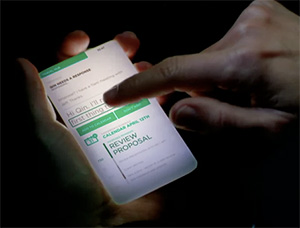
Berg Little Printer

I am definitely going to buy this someday :)

Little Printer lives in your home, bringing you news, puzzles and gossip from friends. Use your smartphone to set up subscriptions and Little Printer will gather them together to create a timely, beautiful mini-newspaper.

http://bergcloud.com/littleprinter/

Typeradio - the radio channel on type & design

http://www.typeradio.org

Typeradio is a Micro FM broadcast, a MP3 internet radio stream and a podcast station. Broadcasting questions, answers, performances, events and talks online and onstage.

02 December, 2011

Celebrity 'Speakers'

Red Dot design award winning Speakers (made in Germany)
http://www.hohrizontal-51.de/

Wireless Speakers which fit in light bulb holder (made in India)
http://violet3d.com/

27 November, 2011

Kickstarter - Funding Platform for Creative Projects

Recently came across this product -  A Hidden Radio & BlueTooth Speaker on Kickstarter. Kickstarter, a funding platform, has an interesting business model to offer. And ofcourse the Radio is awesome :) How Kickstarter basically works is the creator can put his project on this funding platform and interested people can pledge an amount. Once the amount is reached, the project starts off. (read more below)

The HiddenRadio & Bluetooth Speaker is based off minimal, timeless design and user intuition. When asleep it hides all its functions, being silent and unanimated. To turn it on you simply twist and lift the cap; the further you lift the cap the more internal volume is created and will amplify to over 80dB of crystal clear sound. This unique design connects and captivates the user through its intuitive functionality.
Kickstarter is the world's largest funding platform for creative projects. Every week, tens of thousands of amazing people pledge millions of dollars to projects from the worlds of music, film, art, technology, design, food, publishing and other creative fields.

A new form of commerce and patronage. This is not about investment or lending. Project creators keep 100% ownership and control over their work. Instead, they offer products and experiences that are unique to each project.

All or nothing funding. On Kickstarter, a project must reach its funding goal before time runs out or no money changes hands. Why? It protects everyone involved. Creators aren’t expected to develop their project without necessary funds, and it allows anyone to test concepts without risk.

http://www.kickstarter.com

16 November, 2011

How about eating ONLY RAW food!

Recently read this article in the Hindu on how one can live (and relish) only eating uncooked vegetarian food. Some excerpts


Myth 1: Eating raw food means living off salad. Only salad - False
Myth 2: If you're vegan, leave alone vegetarian, your choices of food at a restaurant wiggle down to two - False
Myth 3: You can't live an entire day off food that is uncooked - False

Meet Lisa Pitman and she'll bust these and many more myths for you. A certified raw chef from Canada, Lisa is on a new age crusade across India, Thailand, Bali, Australia, New Zealand and Hawaii convincing people of the “The Healing Power of Plants” and converting them to “Eating Without Heating”. “It's a growing movement and Toronto alone has six raw food restaurants now,” says the petite Lisa, twinkle in the eye.

She starts her day with a smoothie made of kale (a variety of greens), banana, coconut milk, and oats (for texture). The snack she carries to work is either fruit or vegetables. “Lunch is a really big salad with greens, avocado, shredded beets, sauces, dry fruits and a pinch of sea salt.” She snacks in the evening on a raw energy bar she makes and dinner is a veggie wrap. And hold it…she loves dessert — frozen banana whipped in a blender to ice-creamy perfection and topped with berries. “I never ever crave fried food,” she declares, morphing into a goddess in my eyes.  

For 'uncooked receipes' check out Lisa's website www.veganculinarycrusade.com

Future of Interaction Design - Bret Vector

Here is an excellent article on future of interaction design which pushes you to think beyond 'touch' and 'glass'. This article reminded me of the multi-sensory course we did while studying design at N.I.D. I would like to include the last part of the article here

Look down at your hands. Are they attached to anything? Yes — you've got arms! And shoulders, and a torso, and legs, and feet! And they all move!

Any dancer or doctor knows full well what an incredibly expressive device your body is. 300 joints! 600 muscles! Hundreds of degrees of freedom!

The next time you make breakfast, pay attention to the exquisitely intricate choreography of opening cupboards and pouring the milk — notice how your limbs move in space, how effortlessly you use your weight and balance. The only reason your mind doesn't explode every morning from the sheer awesomeness of your balletic achievement is that everyone else in the world can do this as well.
With an entire body at your command, do you seriously think the Future Of Interaction should be a single finger?

15 November, 2011

Now India has 10 crore Internet users!

According to the I-Cube report by Internet and Mobile Association of India, India is set to have 12 crore users by Dec 2011 out of which 9.7 crore will be active users accessing net atleast once a month. Around 9 crore will be from cities and the rest from rural areas.

09 October, 2011

Can someone bring him back?


"Some cause happiness wherever they go,
Others, whenever they go"
Oscar Wilde

16 May, 2011

Angry Birds!


Oh, what a game it is! ...and now they have an online version too!
http://chrome.angrybirds.com

Also, it's interesting to see how Rovio (the company that made Angry Birds) is expanding to build a diversified entertainment franchise spanning all media.

Some estimates put its total usage at 200 million minutes per day.

It is this staying power and loyalty that convinced Hed that Angry Birds can become the platform that makes Rovio, based just outside of Helsinki, Finland, into a global entertainment company.

“When we realized we had a big hit on our hands with Angry Birds, we looked at companies that had gone before us, especially in the mobile gaming sector where we were at that time very firmly,” Hed, CEO of Rovio told CNBC.com.

“We saw that most gaming companies had then immediately tried to make another hit game and we realized that had very rarely worked. Rather, we started to look at what we could do around Angry Birds and if there was a way that we could build this into an entertainment franchise,” he added.

Hed has aggressive expansion plans for Rovio, and said that the company will consider making acquisitions in the more traditional media space in order to advance its strategy.

At Wedbush Morgan, analyst Lou Kerner warns investors not to underestimate the value of social gaming, despite those who dismiss the soaring price tags as another dotcom-style bubble.

“Cityville got to 100 million users in seven weeks. That’s not possible in the world of video games. So you’re looking at much larger user bases at a much lower cost. Even though they might monetize at a lower rate they can still be massively valued companies like Zynga,” he added.

Many commentators even said that Facebook was overvalued at $1 billion, simply “because $1 billion is a big number,” Kerner said.

“The opportunity today I think is unparalleled in the history of gaming to build profitable companies of significant scale. That’s what’s under-appreciated broadly. When Zynga was trading at $1 billion, people said it was overvalued. It was overvalued at $2 billion and it was overvalued at $5 billion and overvalued at $8 billion. So why is it overvalued?”

Read more here.

24 December, 2010

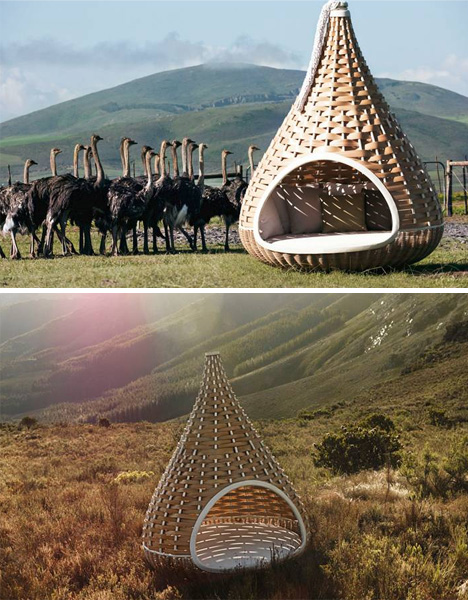
Nice Concept - Nest Rest: Huge Hanging Birdhouse

Tree house meets bird house, with a dash of hammock thrown into the mix. While it is not large enough to house the amenities of a true tree home, it is certainly a step up from a simple outdoor couch or recliner – and can be hung at a variety of heights.

07 November, 2010

Eco Warriors

Today's Times of India has an interesting article on people who try to do their bit to preserve the environment in innovative ways. Excerpts.

Happiness in Innerwear
Quite hooked to the idea of ayur vastra, former journalist Rajiv Rai Sachdev launched his organic range of clothes that contain extracts of neem, basil leaves and flecks of silver to keep the wearer safe from bacterial infections. Based on the age-old principles of natural healing by improving the body’s aura and balancing of chakras, Sachdev’s clothing range, including underwear are designed to boost the body’s
natural resistance and healing powers. Says Sachdev, “Demand from the US and Europe is huge, but sadly, in my own country, people spend huge amounts on cosmetics and medicines, if only they realised that wearing the right fabric would solve half the problems.”

Cool Pool
While battling the concrete jungle to reach office in his friends’ cars, Bangalore based software developer Vipul Kasera realised how smooth and carbon-free his
city would be if people decided car pool. Thus Commute Easy, an online car pool campaign, was launched three years ago. Kasera today has 15,000 users in Bangalore itself who look for car pool services. He has tied up with corporate offices and schools, wherein professionals and children from the same locality can commute together.

Merry Potter
Mansukh Prajapati, a clay potter from Gujarat, invented a first-of-a-kind refrigerator that is made out of terracotta, works without electricity, costs around Rs 2,500! Called Mitti Cool, it keeps food, vegetables, even milk, fresh for days.
Prajapati’s bigger success is his Rs 45 nonstick frying pan made of clay. A crusader for awareness, Prajapati has enriched the world with common-sense products.

10 years of life aboard International Space Station -The Hindu

Next week, Nasa will commemorate 10 years of life on the space station (the first residents arrived on 2 November 2000), but fewer than 200 people have first-hand knowledge of life on board. The longer the stint, the closer these veterans come to perfecting the art of life in freefall.

There is a subtle art to moving around without crashing into anything — or, more annoyingly, others — knocking computers, equipment and other objects off the walls to which they are attached with Velcro pads. The ability to form a mental map of the space station — and then rotate it in 3D to suit your perspective — is a priceless skill for an astronaut.

Each of the crew has a closet-like cabin where they can hook a sleeping bag to the wall and settle down for the night. Some strap pillows to their heads to make it feel more like lying down. Unsurprisingly, falling asleep can take some getting used to. Just as you are nodding off, you can feel as though you've fallen off a 10—storey building. One Russian crew member is renowned for doing without a sleeping bag and falling asleep wherever he ends the day.

01 November, 2010

Future Indian Internet Users

Even though right now only 1% of mobile phone users are using the Internet. India is going to be different than what we’ve seen in mature markets but also in emerging markets. It’s going to be predominantly a mobile experience since the PC penetration is low compared to mobile.

The report also talks about the language and literacy barriers -Global sites that want to keep the edge they already have in India, compared to some other emerging markets, will have to Indianize more than they have so far.

An interesting insight that the report said about 73% of people who go online in India spend time job hunting and the other thing that’s big there is matrimonial which is a very unique Indian thing.

Making money from Indians on the Internet? That’s an even harder proposition. Internet users are much more likely to pay for online services than for content though Indian and Indonesian users are quite reluctant to pay at all, said the report.

Read the full report

15 October, 2010

Must Watch Film - Udaan


Udaan is one of the best films I have relished in recent times. One of the few films which leaves a lasting impression... The film absorbed me completely thanks to its sensitive and gripping storyline, impressive performances and music that just gels too well with the film.

And this is one of my first 'original' post :p

12 October, 2010

Design without Designers by Don Norman

Two Types of Innovation: Incremental Improvements and New Concepts
In design - and almost all innovation, for that matter—there are at least two distinct forms. One is incremental improvement. The manufacturing of products, companies assume that unit costs will continually decrease through continual, incremental improvements. This is what companies call "their cash cow": a product line that requires very little new development cost while being profitable year after year.

The second form of design is what is generally taught in design, engineering and MBA courses on "breakthrough product innovation." Here is where new concepts get invented, new products defined, and new businesses formed. This is the fun part of innovation. As a result, it is the arena that most designers and inventors wish to inhabit. But the risks are great: most new innovations fail. Successful innovations can take decades to become accepted. As a result, the people who create the innovation are not necessarily the people who profit from it.

Both forms of innovation are necessary. The fight over data-driven design is misleading in that it uses the power of one method to deny the importance of the second. Data-driven design through testing is indeed effective at improving existing products. But where did the idea for the product come from in the first place? From someone's creative mind. Testing is effective at enhancing an idea, but creative designers and inventors are required to come up with the idea.

Design without designers? Those who dislike the ambiguity and uncertainty of human judgments, with its uncertain track record and contradictory statements will try to abolish the human element in favor of the certainty that numbers and data appear to offer. But those who want the big gains that creative judgment can produce will follow their own judgment. The first case will bring about the small, continual improvements that have contributed greatly to the increased productivity and lowering of costs of our technologies. The second case will be rewarded with great failures and occasional great success. But those great successes will transform the world.

16 August, 2010

Transitions, Wow moments & Endings

Ever read a great book? What do you remember about it? Maybe a few dramatic moments, some wild story twists, and most definitely the ending. Your product is just like a book. You’re telling a story to your customers and they’ll remember only a select few moments from what you tell them. What are these moments?

Transitions
You know how when you type a city into Google Earth and watch the globe spin around to the country it is in and then zoom into the city? That transition is what you probably mentioned to others when you first described the app.

‘Wow!’ moments

Remember the first time you used Picasa? The first promise Picasa had was: “Find all the photos you forgot you had.” The first run experience delivered exactly that for a disorganized user like me. I rediscovered all sorts of ‘lost’ photos, like an unexpected walk down memory lane.

Endings
● Good ending: You click Google Docs Save and Close button and know that: “Certainty I won’t lose my doc!”
● Bad ending: You click the Close button on a cloud app doc and are not sure if your changes were saved.

Full article here

06 August, 2010

Apple's problem: Too much cash

Apple Inc Chief Financial Officer Peter Oppenheimer faces a dilemma that perhaps every finance chief wishes to have: obscene amounts of cash and nowhere to put it.

The iPhone, iPad, iPod and Mac computer maker has accumulated a cash pile that totals nearly $46 billion, the biggest cash hoard among U.S. tech companies and equivalent to one-fifth of Apple's market capitalization.

And yet, due to an ultra-conservative investment strategy and low interest rates, that cash is earning next to nothing for Apple, which rarely makes acquisitions and does not pay a regular dividend or buy back stock. Analysts say Apple's near-death experience in the 1990s helps explain why it likes to remain liquid by investing in safe but low-yielding U.S. Treasury and agency debt.

Oppenheimer's cautious approach dates from his time at Automatic Data Processing Inc, but Apple's conservatism is also driven by Chief Executive Steve Jobs.

Both Jobs, 55, and Oppenheimer, 47, subscribe to the Silicon Valley maxim that "only the paranoid survive," he said.

They remember the dark days when Apple was struggling to stay alive and had to lay off thousands to cut costs. When Oppenheimer joined the company in 1996 as its controller for the Americas, a series of bad management decisions had eroded profits and sent its share price diving to less than $5.

Things got so bad that one of the first things Jobs did when he returned to Apple was take a lifeline in the form of a $150 million investment from Microsoft Corp in 1997.

Although Apple is famous for innovation, research and development costs only account for 3 percent of revenue - far lower than at Microsoft and Cisco Systems Inc, due in part to Apple's narrow product portfolio.

Apple does not appear to pay especially high salaries, either. According to career website glassdoor.com, which relies on anonymous users sharing their salary data, an Apple software engineer earns around $100,000 per year, roughly the same as engineers at Google Inc.

While many top tech companies are awash in cash, unlike Apple, they tend to put excess cash to use. For example, Intel Corp and Microsoft pay dividends; Cisco and International Business Machines Corp buy back big chunks of stock; and Hewlett-Packard Co and Oracle Corp are serial acquirers.Apple makes few acquisitions because it develops products internally, and pays little for what it does buy.

Full article here